
- All
- Product Name
- Product Keyword
- Product Model
- Product Summary
- Product Description
- Multi Field Search
Views: 3 Author: Site Editor Publish Time: 2026-08-01 Origin: Site


Selecting the right face protection requires looking far beyond surface marketing jargon. Procurement managers and clinical directors face an incredibly difficult task today. They must deeply understand underlying material science and advanced structural engineering. This specialized knowledge proves critical for ensuring strict regulatory compliance. It guarantees essential staff safety and drives optimal budget efficiency.
We need a clear, evidence-based understanding of modern non-woven fabrics. You must grasp exactly how layer configurations and complex filtration mechanics interact. Together, they meet rigid regulatory standards like ASTM F2100 or NIOSH. This article deconstructs the highly complex anatomy of a Medical Mask. We provide clinical decision-makers with a robust, actionable technical framework. You can use it to evaluate supplier performance claims accurately. We will help you match exact technical specifications directly to known clinical risks. Ultimately, you will make better, highly informed purchasing decisions.
Material Reliance: True medical-grade protection relies on synthetic non-woven polymers—specifically melt-blown polypropylene—to achieve sub-micron filtration.
Layer Anatomy: The industry standard SMS (Spunbond-Meltblown-Spunbond) architecture balances fluid resistance, particle trapping, and breathability.
Filtration Complexity: High-performance masks do not act as simple sieves; they utilize electrostatic charges to capture aerosols.
Evaluation Standards: Purchasing decisions must map directly to standardized ratings (ASTM Levels 1-3) evaluating Bacterial Filtration Efficiency (BFE), Particulate Filtration Efficiency (PFE), fluid resistance, and Delta-P (breathability).
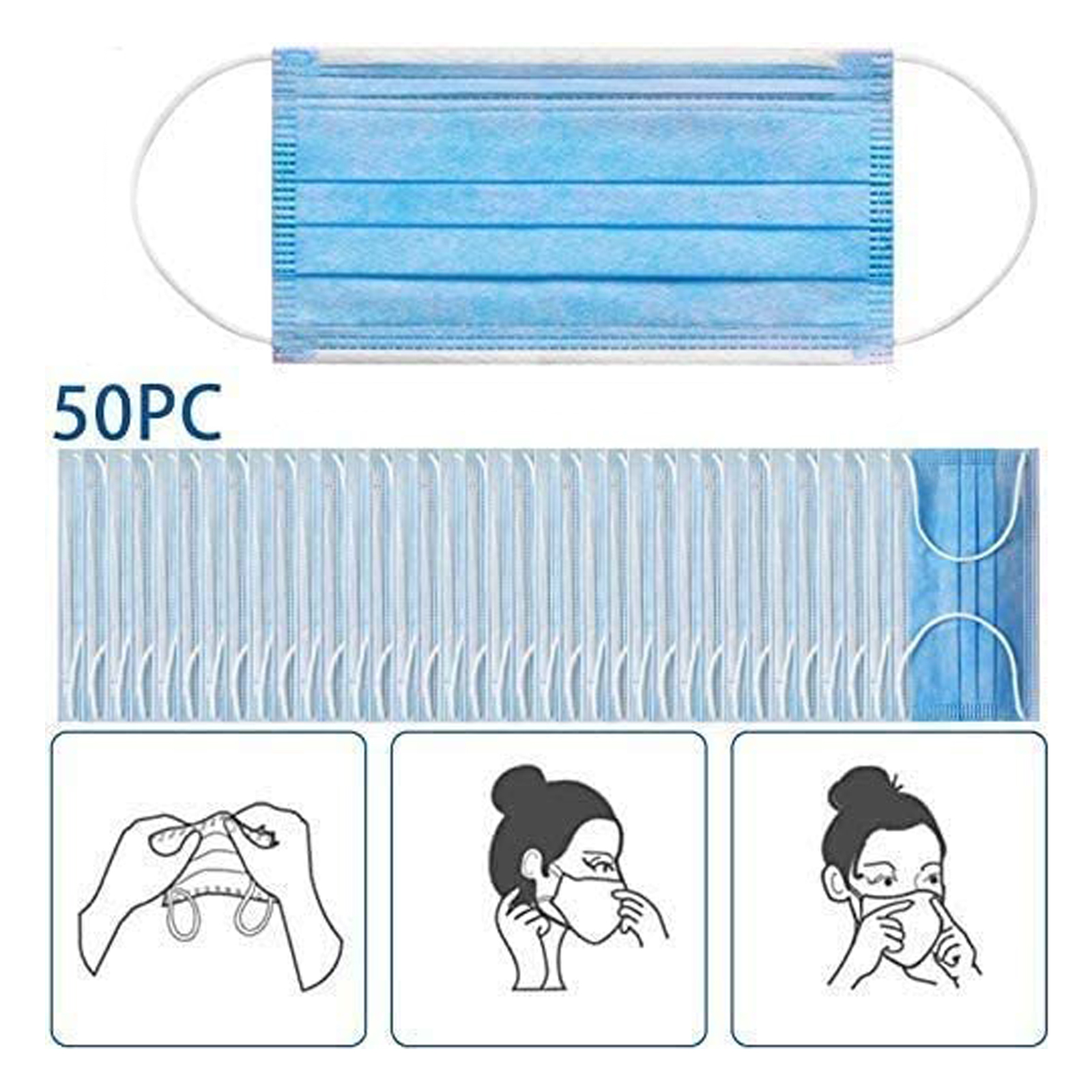
Modern healthcare strictly mandates non-woven synthetic fabrics over traditional woven textiles. Woven cotton or linen cannot provide predictable or consistent pore sizes. They often absorb dangerous fluids rather than actively repelling them. Non-woven materials solve these critical safety issues immediately. They offer highly consistent fluid dynamics and structural uniformity. Manufacturers engineer them specifically for demanding medical environments.
Polypropylene (PP) serves as the undisputed industry standard for raw materials. Suppliers prefer PP resin for its incredible manufacturing scalability. It allows massive production runs at lower price points. More importantly, polypropylene possesses naturally strong hydrophobic properties. It actively repels water, blood, and dense biological fluids. This specific characteristic remains essential for proper fluid barrier performance.
We must clearly differentiate between the two main fabrication methods. They serve completely different structural purposes within the final product.
Spunbond Fabrication: Extruders spin continuous polymer filaments rapidly. They lay them down into a strong, uniform web structure. This creates robust physical support and prevents material tearing. Manufacturers use spunbond fabric for both inner and outer protective layers.
Melt-Blown Fabrication: This complex layer acts as the critical filtration engine. High-velocity air shreds molten polymer into ultra-fine micro-fibers. They form a highly dense, chaotic, and overlapping web. This unique structure traps microscopic pathogens extremely effectively.
Procurement teams face significant daily risks regarding material sourcing. Global market fluctuations often impact delicate melt-blown fabric quality. Subpar melt-blown layers dramatically reduce protective capabilities for your frontline staff. You must verify supplier material specifications rigorously and routinely. Always request independent testing documentation before signing long-term contracts. Counterfeit products often substitute cheap spunbond material in the middle layer. This dangerous practice completely eliminates sub-micron filtration efficiency.
Every standard protective product relies on a highly specialized structural design. The SMS (Spunbond-Meltblown-Spunbond) configuration forms the standard 3-ply architecture. Each distinct layer serves a specific, vital function. They work together harmoniously. They ensure maximum clinical protection and daily breathability.
Outer Layer (Spunbond): This sturdy layer acts as a strict hydrophobic barrier. It actively repels bodily fluids, arterial blood splashes, and environmental moisture. It prevents external liquid contaminants from saturating the delicate internal filter media.
Middle Layer (Melt-blown): This serves as the primary, high-density filtration media. It requires careful electrostatic charging during the manufacturing process. This applied electrical charge significantly boosts overall particle capture efficiency.
Inner Layer (Spunbond or Thermal Bond): Manufacturers design this soft layer utilizing hydrophilic properties. It must quickly absorb internal wearer moisture like sweat and exhalation. It maintains necessary skin comfort during extended twelve-hour shifts.
High-risk clinical environments frequently require advanced multi-layering approaches. Specialized surgical teams often need robust 4-ply or 5-ply configurations. N95 and FFP2 respirators introduce additional stiff supportive layers. Some premium models utilize dual melt-blown layers for enhanced security. They capture a dramatically higher percentage of dangerous airborne particulates.
However, increasing the layer count creates a crucial physical trade-off. Thicker structures severely impact the overall pressure drop (Delta-P). Higher Delta-P means heavily restricted airflow for the user. Wearers experience rapid heat stress and facial discomfort. They might suffer from dangerous user fatigue quickly. Discomfort often lowers overall wearer compliance across hospital departments. Staff might improperly adjust their gear just to breathe easier. You must constantly balance high filtration power against everyday wearability. Using high-quality Protective Products guarantees you meet specific operational demands comfortably.
Many professionals fundamentally misunderstand how high-performance filtration materials actually work. They do not act as simple sieves or basic window screens. A standard sieve only blocks items larger than its physical holes. Non-woven medical filters utilize complex physics to capture microscopic threats efficiently.
We can break down these advanced mechanics into several distinct, measurable stages:
Inertial Impaction: Large droplets and bacteria travel rapidly inside airstreams. They carry far too much momentum to navigate around solid fibers. They crash directly into the dense non-woven matrix.
Interception: Medium-sized aerosol particles follow the primary airflow very closely. They brush against the edge of a polymer fiber as they pass. The sticky fiber grabs them securely and permanently.
Diffusion (Brownian Motion): Ultrafine microscopic particles behave erratically in space. Particles smaller than 0.1 microns bounce randomly through the surrounding air. This erratic zig-zag path guarantees they eventually hit the dense fiber web.
Electrostatic Attraction: This represents the absolute critical differentiator for quality gear. Manufacturers permanently charge the internal melt-blown fibers electrically. The static charge acts like a powerful magnet for passing viral aerosols.
Electrostatic charging creates tremendous filtration efficiency. It does this without adding unnecessary material thickness. However, this delicate electrical charge degrades over time. High ambient humidity and direct liquid exposure destroy the magnetic effect rapidly. This reality emphasizes the urgent need for strict single-use protocols. You must enforce printed expiration dates strictly. Old storage inventory loses its electrostatic properties completely.
You must also understand two vital clinical testing metrics. BFE (Bacterial Filtration Efficiency) measures capture rates for larger particles around 3.0 microns. PFE (Particulate Filtration Efficiency) evaluates performance against much smaller threats, typically around 0.1 microns. High BFE results do not automatically guarantee high PFE performance.
Purchasing decisions demand rigorous, objective evaluation against established industry standards. The ASTM F2100 standard serves as the primary US evaluation lens. It demystifies bold performance claims through strict, standardized laboratory testing. Understanding these distinct barrier levels ensures appropriate clinical deployment everywhere.
Performance Metric Category | Level 1 (Low Fluid Barrier) | Level 2 (Moderate Fluid Barrier) | Level 3 (High Fluid Barrier) |
|---|---|---|---|
Fluid Resistance (mmHg) | 80 (Simulates standard venous pressure) | 120 (Simulates standard arterial pressure) | 160 (Simulates high-velocity trauma pressure) |
BFE & PFE Capture Coverage | ≥ 95% efficiency required | ≥ 98% efficiency required | ≥ 98% efficiency required |
Primary Clinical Use Case | Standard patient exams, basic triage | Endoscopy, suturing, minor procedures | Major trauma, complex cardiovascular surgery |
Breathability remains just as functionally important as raw filtration capability. The Delta-P metric precisely measures the physical resistance to airflow. A product boasting 99% filtration becomes practically useless if the Delta-P sits too high. Extremely high resistance causes exhaled air to leak around the facial edges. Unfiltered ambient air bypasses the protective central material completely during inhalation.
Flammability forms another essential baseline safety requirement. Modern operating room environments frequently utilize surgical lasers and electrocautery devices. These advanced tools generate intense localized heat and stray sparks constantly. ASTM standards mandate strict Class 1 flammability ratings for compliance. This ensures the synthetic polymers melt safely rather than combusting violently. It actively prevents severe facial burns during complex surgical procedures. You must verify these specific test results carefully. Choosing fully compliant Protective Products eliminates these hidden workplace hazards.
Successful procurement strategies align physical product specifications directly to exact clinical use cases. You must actively avoid expensive over-purchasing habits. Supplying Level 3 options for basic triage duties wastes critical budget resources fast. Conversely, under-protecting frontline staff carries massive legal liability. You cannot safely issue Level 1 products during aerosol-generating procedures. Thorough departmental risk assessment must guide every single purchasing choice.
Verifying supplier marketing claims requires extreme diligence and patience. You must demand independent third-party laboratory testing reports upfront. Look for reputable institutional names like Nelson Labs on the provided documentation. Do not accept internal manufacturer testing results as absolute scientific proof. You must also learn to quickly spot red flags for counterfeit materials. Fake products often catch fire easily instead of melting safely. This alarming reaction indicates a complete absence of genuine melt-blown polypropylene inside.
Fit and overall wearability factors drive long-term organizational adoption. You should assess elastic ear loop tension very carefully. Rigid metal nose-wires ensure a much tighter facial seal. Excellent material softness minimizes uncomfortable skin friction during gruelling long shifts. Ignoring these critical factors leads directly to severe user fatigue. Frustrated staff will frequently adjust uncomfortable gear. This dangerous action breaks the sterile field and increases contamination risks immediately.
We highly recommend a cautious, phased approach for bulk implementation. Always request diverse sample batches first. Evaluate the provided technical data sheets (TDS) against your internal compliance matrix. Conduct internal fit and comfort audits involving real clinical staff members. Gather their direct subjective feedback before finalizing any massive bulk purchase orders.
Achieving proper clinical protection requires a very careful, educated balance. You must constantly weigh raw material quality against structural design and rigorous testing. Genuine melt-blown polypropylene provides the essential foundation for daily safety. The standardized SMS layer architecture ensures maximum durability and essential breathability. Standardized ASTM testing effectively validates these critical engineering choices.
We strongly recommend auditing your current inventory immediately. Compare your existing stock against actual departmental operational risks. Verify ongoing supplier consistency through regularly updated testing reports. Do not let organizational complacency compromise vital staff safety.
Take proactive steps today to secure your entire clinical supply chain. Contact our specialized consulting team for a comprehensive, customized compliance audit. You can easily request official spec sheets and physical product samples. Let us help you evaluate your options effectively and thoroughly.
A: Standard cloth options utilize simple woven textiles like cotton or linen. They offer incredibly poor fluid resistance and highly variable pore sizes. Professional-grade options rely heavily on synthetic non-woven polymers. They use melt-blown polypropylene layers to achieve highly consistent sub-micron filtration. They also utilize distinct electrostatic charges for superior particulate capture.
A: A standard 3-ply option fits somewhat loosely against the face. It primarily protects patients from the wearer's direct respiratory emissions. An N95 respirator forms a very tight, secure facial seal. It effectively filters 95% of airborne particles. It specifically protects the actual wearer from dangerous external aerosolized pathogens.
A: The crucial electrostatic charge placed on the internal melt-blown filtration layer degrades gradually over time. Environmental factors like high ambient humidity accelerate this decay significantly. Using expired inventory means relying on severely diminished filtration efficiency. This directly compromises established clinical safety protocols and puts staff at immense risk.
A: No. Washing destroys the vital electrostatic charge entirely. Water and harsh chemical detergent break down the delicate non-woven fiber matrix. This absolutely ruins the protective structural integrity. You must strictly adhere to single-use protocols to maintain consistent defense mechanisms across your medical facility.
A: Delta-P indicates the exact pressure drop across the entire material structure. It accurately measures physical breathability. A high Delta-P value means much greater airflow resistance. Excessive resistance forces unfiltered ambient air to leak dangerously through the side gaps. This defeats the internal filter media completely.
