
- All
- Product Name
- Product Keyword
- Product Model
- Product Summary
- Product Description
- Multi Field Search
Views: 0 Author: Site Editor Publish Time: 2026-07-22 Origin: Site


Selecting the wrong facial PPE exposes organizations to severe compliance penalties. You also risk elevated infection rates and waste valuable safety budgets. Procurement errors often happen during high-pressure situations. Decision-makers need reliable, standard-based information to avoid these costly mistakes.
Professionals frequently conflate the terms "protective mask" (respirators) and "medical mask" (surgical masks). They assume these devices offer interchangeable safety nets. However, they serve fundamentally different functions in hazardous environments. They follow distinct regulatory pathways. They also require entirely different implementation protocols to work correctly.
This guide provides a clear, standard-based evaluation framework. We will help procurement managers and safety officers navigate these complex product categories. You will learn how to map the right mask type to specific environmental risks perfectly. We also highlight essential compliance requirements to guarantee workplace safety.
Direction of Protection: Medical masks primarily provide source control (protecting others from the wearer), while a true protective mask provides inhalation protection (protecting the wearer from airborne hazards).
Seal and Fit: Protective masks require a tight facial seal and mandatory fit testing to function; medical masks are deliberately loose-fitting.
Regulatory Authority: In the US, medical masks are cleared by the FDA, whereas protective masks are evaluated and approved by NIOSH (or global equivalents like CE/FFP2).
The Hybrid Solution: "Surgical respirators" exist to bridge the gap, offering both particulate filtration and fluid resistance for high-risk clinical environments.
You cannot make informed procurement decisions without understanding foundational definitions. Safety equipment manufacturers engineer specific products for highly targeted use cases. We must separate surgical barriers from respiratory filters to understand their true value.
Industry standards define a medical mask as a loose-fitting, disposable device. It creates a physical barrier between the wearer's mouth and nose and surrounding potential contaminants. Doctors and nurses have used these devices for decades in clinical environments.
Its primary function focuses on source control. This means it traps large respiratory droplets expelled when the user speaks, coughs, or sneezes. It protects patients and sterile fields from the wearer. Additionally, it offers fluid resistance. This feature protects the wearer from unexpected blood or bodily fluid splashes.
Common Mistake: Many users mistakenly believe a medical mask filters the air they breathe. Because it lacks an airtight seal, inhaled air simply bypasses the filter media entirely.
A true Protective Mask is a tight-fitting piece of personal protective equipment (PPE). Engineers design these devices to achieve a close facial fit. They utilize advanced melt-blown polymer fabrics to achieve highly efficient filtration.
Their primary function is inhalation protection. They filter out up to 95% or more of airborne particles. This includes large droplets and microscopic aerosols. When worn correctly, inhaled air must pass directly through the filtration material. This mechanism provides superior safety in dangerous respiratory environments.
Mask Baseline Comparison
Feature Category | Medical Mask (Surgical) | Protective Mask (Respirator) |
|---|---|---|
Fit Type | Loose-fitting | Tight-fitting (sealed) |
Primary Protection Goal | Protect others (Source Control) | Protect wearer (Inhalation) |
Testing Focus | Fluid resistance, bacterial filtration | Particulate filtration, airflow resistance |
Reusability | Strictly single-use | Often limited reuse (unless soiled) |
Understanding the engineering differences between these two masks reveals why they perform differently. Let us examine the three core technical pillars: seal dynamics, filtration capabilities, and fluid defense mechanisms.
Medical masks allow significant edge leakage when you inhale. Air follows the path of least resistance. When a wearer breathes in, unfiltered air rushes through the gaps around the cheeks and nose. This edge leakage renders them ineffective against microscopic airborne threats.
A Protective Mask relies entirely on an airtight seal. Nose clips and robust elastic headbands create continuous pressure against the face. Because the edges remain sealed, air is forced entirely through the micro-fibers. This captures dangerous particulates before they reach your lungs.
Testing laboratories evaluate these devices using entirely different metrics.
Medical Masks: Labs test these for Bacterial Filtration Efficiency (BFE) and Particulate Filtration Efficiency (PFE). They test at a relatively large micron scale. The testing primarily measures outward filtration. It ensures the wearer's expelled bacteria stay trapped inside the fabric.
Protective Masks: Labs test respirators against non-oil aerosols, typically at a much smaller 0.3-micron scale. They push aerosols at a high velocity to simulate heavy breathing. The testing focuses primarily on inward filtration. It ensures environmental hazards cannot penetrate the mask media.
Fluid resistance is crucial in surgical suites and trauma centers.
Medical masks must meet specific ASTM standards for synthetic blood penetration. Manufacturers classify them as Level 1, 2, or 3. Level 3 offers the highest resistance to pressurized fluid splashes.
Standard respirators are not inherently fluid-resistant. Industrial models prioritize breathability over splash protection. Unless specifically designated as "surgical respirators," they may fail to protect wearers from liquid hazards.
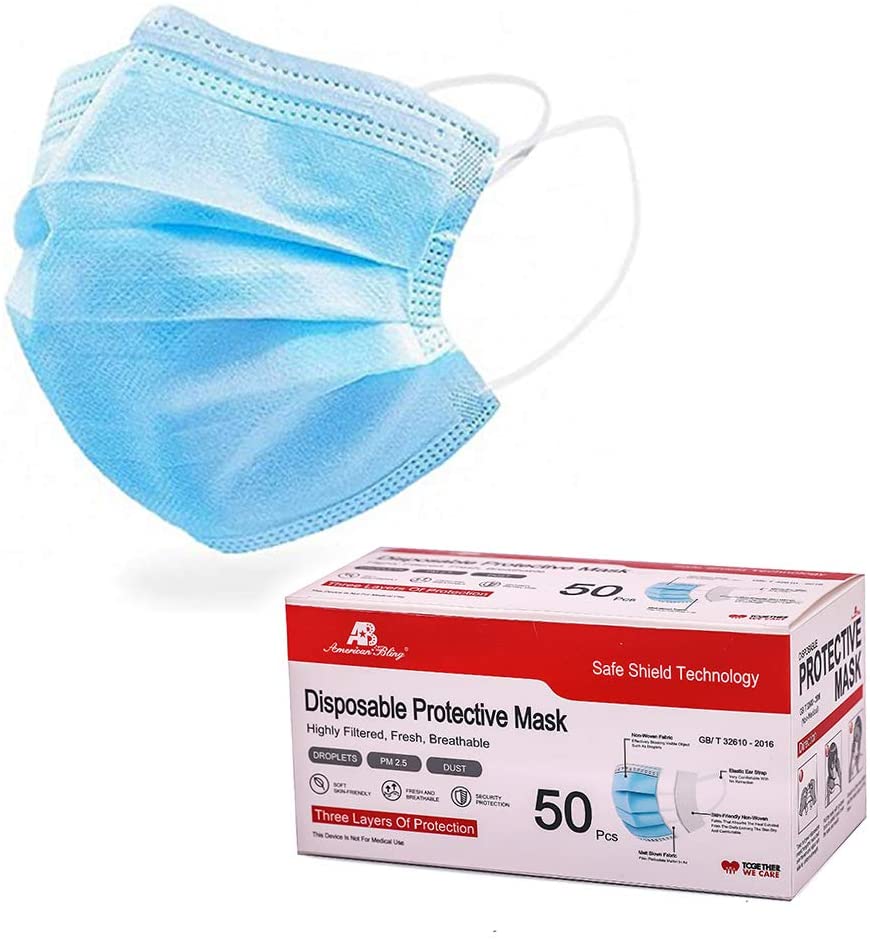
Matching the equipment to the hazard is the cornerstone of occupational safety. Purchasing the highest filtration device is not always the smartest choice. You must align the product's strengths to your specific environmental realities.
Certain environments require basic source control without extreme respiratory threats. You should deploy medical masks in these scenarios:
General Patient Care: Checking vital signs or conducting routine exams where airborne pathogens are unlikely.
Routine Dental Procedures: Situations requiring splash protection without high-velocity aerosol generation.
Low-Aerosol Clinical Environments: Triage desks, hospital pharmacies, and outpatient waiting rooms.
Public Health Settings: Implementing basic source control for corporate employees, visitors, or school staff during mild seasonal outbreaks.
Best Practice: Keep a robust supply of medical masks at building entrances. They offer an excellent, cost-effective way to enforce baseline hygiene rules.
High-risk environments demand robust inhalation protection. You must supply a certified Protective Mask in the following scenarios:
Industrial Settings: Environments heavily contaminated with airborne particulate hazards. This includes construction dust, welding fumes, and non-oil manufacturing aerosols.
Airborne Infection Isolation Rooms (AIIR): Hospital wards housing highly contagious patients.
Aerosolized Pathogen Environments: Areas with known exposure risks to tuberculosis, measles, or severe respiratory viruses like COVID-19.
Sometimes, workers face overlapping dangers. Operating rooms present a unique challenge. Surgeons encounter both airborne respiratory hazards (from laser plumes or intubation) and high-velocity fluid splashes (from arterial bleeding).
In these exact situations, teams deploy the "Surgical N95." This specialized hybrid offers the airtight particulate filtration of a respirator. It simultaneously provides the rigorous fluid resistance of a Level 3 medical mask. They are essential for trauma units and complex surgeries.
Counterfeit PPE flooded global markets in recent years. Fake products put workers at immediate risk and expose companies to massive legal liabilities. You must establish strict validation protocols before authorizing any purchase orders.
Medical mask validation requires checking two distinct regulatory benchmarks. First, verify FDA 510(k) clearance if you operate in the United States. This confirms the government recognizes the product as a legitimate medical device. Second, demand independent lab testing data. The product must meet ASTM F2100 standards. Review the documentation to confirm its specific fluid resistance level (Level 1, 2, or 3).
Validating industrial or healthcare respirators requires even greater diligence.
To verify NIOSH approval, locate the TC-84A-XXXX approval number printed directly on the mask. You must cross-reference this exact number with the official CDC/NIOSH Certified Equipment List (CEL). If the number does not appear in the database, the product is unauthorized.
For international standards like KN95 or FFP2, verification shifts slightly. You must evaluate the manufacturer's provided independent testing documentation. Verify their authorized representative status in the target country. Always demand testing reports from accredited third-party laboratories.
Certification Validation Checklist
Mask Type | Primary Agency | Key Document/Number to Request | Red Flag Indicator |
|---|---|---|---|
Medical / Surgical | FDA / ASTM | 510(k) Letter, ASTM F2100 Lab Report | Claims of "N95 equivalence" |
Industrial Respirator | NIOSH | TC-84A-XXXX Number | Ear loops instead of headbands |
Surgical Respirator | NIOSH & FDA | TC Number AND 510(k) Clearance | Missing dual-agency documentation |
Procurement teams must train staff to spot obvious counterfeit indicators. Common red flags include missing approval numbers on the device exterior. Watch out for decorative add-ons like sequins or unauthorized exhaust valves. Be highly suspicious of vendors claiming "FDA approval" for standard industrial respirators. The FDA does not approve standard N95s; they only clear surgical N95s.
Buying the correct product represents only half the challenge. Successful implementation dictates actual safety outcomes. Facility managers must balance regulatory compliance, logistics, and supply chain reliability.
You cannot simply hand out respirators to employees. Rolling out any Protective Mask requires strict regulatory adherence. OSHA mandates a formal, written respiratory protection program. This program involves significant administrative work.
Every single user must undergo an annual medical evaluation. A physician must clear them to wear tight-fitting PPE safely. Afterward, each user requires mandatory fit testing. This physical test ensures the specific make and model forms a perfect seal against their unique facial structure. This testing bottleneck requires dedicated time and specialized equipment.
Financial considerations always influence procurement strategies. Medical masks maintain a notably lower unit cost. They also boast an incredibly easy adoption curve. Users simply loop them over their ears without formal training requirements.
Conversely, protective respirators carry higher unit costs. They also demand significant implementation overhead due to fit testing and medical clearances. However, these costs are non-negotiable for specific safety compliance requirements. Failing to provide them in hazardous environments guarantees regulatory fines and endangers human life.
Finding a trustworthy vendor stabilizes your safety operations. Use this logic to shortlist potential suppliers:
Prioritize Transparency: Select vendors who provide transparent supply chain documentation upfront. They should offer lot traceability for every box shipped.
Demand Certification Data: Readily available certification data proves vendor competence. If they hesitate to share testing reports, move to another supplier immediately.
Request Physical Samples: Always request samples for fit-test compatibility before placing bulk orders. A mask might pass NIOSH testing but fail miserably on your specific workforce's facial profiles.
Choosing between a protective mask and a medical mask is not about finding the "better" mask. It is about finding the medically and legally appropriate tool for the specific environmental hazard. A high-filtration respirator wastes money in a low-risk waiting room. Conversely, a basic surgical mask offers zero defense in an airborne isolation ward.
Advise your safety and procurement teams to conduct a formal workplace hazard assessment immediately. Define your exact filtration needs, fluid resistance limits, and regulatory requirements before ever requesting vendor quotes. Proper assessment ensures you buy exactly what you need.
Do not leave your workforce's respiratory health to chance. Explore our catalog of fully certified PPE today. Download our comprehensive buyer's checklist to streamline your next procurement cycle. You can also contact our specialists for a customized, compliance-focused consultation to secure your supply chain.
A: No. Due to edge leakage, a medical mask cannot provide reliable inhalation protection against airborne aerosols, regardless of the material's filtration efficiency. Airborne particles will simply bypass the filter media through the gaps around your cheeks and nose.
A: A standard N95 is NIOSH-approved for particulates. A surgical N95 is dual-cleared: approved by NIOSH for particulate filtration and cleared by the FDA for fluid resistance in clinical settings. This dual clearance makes it safe against both microscopic aerosols and high-velocity blood splashes.
A: Yes. The elastic bands degrade over time, compromising the seal, and the electrostatic charge on the filter media can dissipate. Always check the manufacturer's expiration date. Storing them in extreme temperatures can also accelerate this degradation process.
A: Yes, in occupational settings. OSHA mandates a formal respiratory protection program, including training on donning, doffing, and fit-checking, before an employee relies on a protective mask. Improper wear entirely negates the device's protective engineering.
