
- All
- Product Name
- Product Keyword
- Product Model
- Product Summary
- Product Description
- Multi Field Search
Views: 1 Author: Site Editor Publish Time: 2026-08-12 Origin: Site


The transition from mandate-driven mask rules to personal risk management demands clear, evidence-based criteria for selecting facial coverings. You need a reliable framework to evaluate your daily safety tools without second-guessing. While synthetic respirators represent the highest tier of defense, the reusable Cotton Mask remains a highly adopted, sustainable option for basic source control. We often overlook how effective it can be in low-risk environments when properly designed and fitted. This article defines the mechanical capabilities, strict evaluation criteria, and appropriate use cases for cloth coverings. We will help you make informed, safety-conscious purchasing and daily-use decisions. You will learn how to assess fabric density, master layering techniques, and determine exactly when to deploy these masks safely.
A high-quality cotton mask functions primarily through mechanical filtration (tight fabric weaves) rather than electrostatic charge.
For optimal efficacy, a cotton mask must feature at least two to three layers of tightly woven fabric and a contour-hugging fit.
Cotton masks are best deployed as "source control" in low-to-moderate risk environments, not as primary PPE in high-transmission medical settings.
Integrating a cotton mask over a surgical mask ("double masking") significantly improves overall fit and filtration efficiency.
Cotton coverings rely entirely on the principles of mechanical filtration. The woven fibers create a complex physical obstacle course for airborne particles. Tighter weaves physically block larger respiratory droplets from passing through the material. Quilting cotton excels at this because its dense structure minimizes the empty space between individual threads. Particles essentially crash into the fibers and become trapped.
We must clearly distinguish between source control and personal protection. Cotton primarily functions as source control. It traps the expelled droplets you generate when you speak, cough, or sneeze. It stops your respiratory emissions from traveling across a room. At the same time, it offers secondary, limited inward protection against environmental particulates. It blocks larger dust and pollen particles from entering your airways.
You must remain realistic about material limitations. Cotton lacks the specialized melt-blown layers found in clinical respirators. Synthetic respirators use an electrostatic charge to attract and hold microscopic aerosols. Cotton fibers do not possess this static charge natively. Because of this missing electrostatic mechanism, standard cloth weaves cannot stop the smallest infectious aerosols effectively. You should frame its baseline capability around trapping larger droplets rather than filtering microscopic viral particles.
Assuming all cloth materials filter equally regardless of weave density.
Believing a thick single layer outperforms thinner multiple layers.
Equating breathability with poor filtration. (Some tight weaves breathe well while filtering effectively).
Navigating the hierarchy of protection requires understanding exactly how different masks perform. Each tier serves a specific purpose in respiratory defense. You must align your choice with your immediate environment and risk tolerance.
The N95 and KN95 respirators stand as the gold standard in the protection hierarchy. They utilize advanced electrostatic filtration to capture up to 95 percent of airborne particles. Manufacturers must adhere to strict regulatory compliance standards. These respirators provide maximum inward and outward protection. However, they can feel restrictive during prolonged wear.
Surgical masks occupy the middle ground. They offer excellent fluid resistance and rely on synthetic melt-blown materials for good filtration. Unfortunately, they frequently suffer from poor facial fit. They tend to gap significantly at the cheeks and jawline. This leakage allows unfiltered air to bypass the filtration material entirely, reducing their overall efficacy.
Cotton masks provide a highly breathable and reusable alternative. Their filtration capability remains highly variable and depends entirely on construction quality. They excel in everyday, low-risk scenarios where prolonged comfort matters most. When evaluating your options, you must balance environmental impact and long-duration breathability. Reusable cloth designs significantly reduce the daily accumulation of synthetic waste.
Respiratory Protection Comparison Matrix
Mask Type | Filtration Mechanism | Primary Benefit | Notable Drawback | Environmental Impact |
|---|---|---|---|---|
N95 / KN95 | Electrostatic & Mechanical | Maximum aerosol filtration | Can cause breathing fatigue | High (Disposable) |
Surgical Mask | Electrostatic | Fluid resistance | Poor facial seal (side gaps) | High (Disposable) |
Multi-layer Cotton | Strictly Mechanical | Sustainable and breathable | Variable filtration quality | Low (Reusable) |
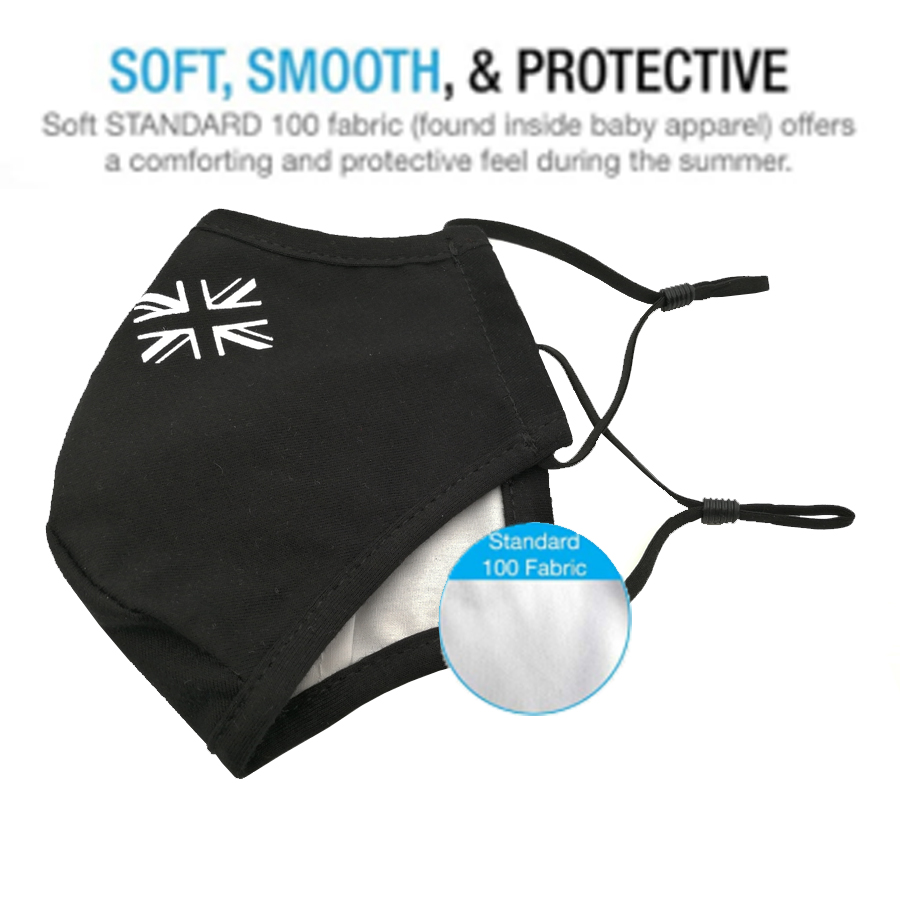
Not all cloth coverings perform equally. You must evaluate them against stringent structural criteria before integrating them into your routine. Assessing fabric density, architecture, and hardware ensures you select an effective barrier rather than a decorative accessory. When you audit your current stock of Protective Products, keep these crucial metrics in mind.
Fabric Density and Thread Count: You need high-thread-count, tightly woven cotton. You can test this by holding the fabric up to a bright light. If you see light passing through the individual fibers easily, the weave is too loose. Avoid single-layer neck gaiters or loosely knit materials completely. They offer negligible mechanical filtration.
Layering Architecture: Establish a minimum standard of two layers. Ideally, you should seek out three-layer designs. Hybrid material designs provide measurable benefits. A mask featuring a durable cotton outer layer combined with a silk or chiffon inner layer works exceptionally well. Silk provides slight electrostatic properties, enhancing the mechanical trapping effect of the cotton.
Fit and Seal Features: A mask only works if air passes through the fabric instead of around it. You need adjustable ear loops or secure head ties to prevent side leakage. Integrated, adjustable nose wires are non-negotiable. A strong metal nose wire prevents your breath from escaping upward, which stops your glasses from fogging and secures the critical upper seal.
Filter Pockets: Designs featuring an internal pocket add significant versatility. You can insert disposable PM2.5 or polypropylene filters inside the pocket. This simple addition bridges the performance gap between basic cloth and clinical-grade synthetic masks. It provides an extra layer of particulate defense in crowded environments.
Always inspect the stitching quality around the borders. Weak seams will eventually fray, which degrades the overall tension required to maintain a secure facial seal.
Context determines safety. Deploying the right tool for the right environment prevents unnecessary exposure. You must map your mask selection directly to your situational risk profile.
Cotton coverings excel in specific, controlled environments. They provide adequate source control when transmission risks remain low.
Outdoor Crowded Spaces: Use them at farmers' markets, outdoor sporting events, or busy sidewalks where fresh air dilutes airborne particles rapidly.
Brief Indoor Transactions: They work well for quick trips into retail stores or coffee shops where you spend minimal time in shared airspace.
General Allergy Management: They effectively reduce inhalation of large pollen grains, pet dander, and basic household dust.
Ventilated Workplaces: You can rely on them in offices featuring upgraded HVAC filtration systems and strict social distancing protocols.
You must abandon cloth coverings in high-risk environments. Relying on them in these scenarios creates a false sense of security.
Clinical Settings: Hospitals and urgent care centers require clinical-grade N95 respirators.
Caring for Infectious Individuals: Close, sustained contact with sick family members requires electrostatic filtration.
Poorly Ventilated Areas: Extended exposure in dense, poorly ventilated indoor spaces like crowded transit buses or concert halls demands synthetic respirators.
The American Medical Association (AMA) backs a highly effective protocol known as double masking. You wear a well-fitted, multi-layer cotton covering directly over a disposable surgical mask. The surgical mask provides superior electrostatic filtration. However, its loose fit compromises its effectiveness. Adding the structured cloth covering on top clamps down the edges of the surgical mask. This combination forces inhaled and exhaled air through the synthetic filter rather than out the sides. It merges electrostatic filtration with a superior mechanical seal.
A reusable fabric covering requires diligent maintenance to remain effective. Neglecting care protocols degrades both the structural integrity and the hygiene of the mask. You must treat them with the same care as essential medical tools.
Repeated washing introduces unavoidable degradation risks. Hot water and friction slowly break down natural cotton fibers. Over time, fabric wear reduces the overall thread density, which directly lowers the mechanical filtration efficiency. Furthermore, aggressive washing can cause shrinkage. Even minor shrinkage can distort the perimeter shape. This distortion ruins the facial seal, allowing unfiltered air to bypass the fabric entirely.
You must follow strict laundering protocols to ensure sanitization without destroying the material. Machine wash your masks using standard laundry detergent. The surfactants in the detergent effectively destroy the lipid envelopes of many viruses and bacteria. You should dry them using high heat. High-heat drying ensures complete moisture removal and promotes minor fiber contraction, which helps maintain the tightness of the weave.
Lifecycle management requires keen observation. You cannot use a cloth covering indefinitely. Establish clear visual cues to determine when a mask must be retired. Discard it immediately if you notice frayed edges, snapping elastic bands, or thinning fabric. If you can see light easily penetrating the center of the mask after several washes, the protective barrier has failed.
Wash after every single day of use.
Use a mesh laundry bag to protect ear loops from stretching.
Store clean masks in a breathable paper bag, not a sealed plastic container, to prevent mold growth.
A multi-layer cotton mask serves as a highly specific tool for low-risk jobs. It provides excellent, sustainable source control for daily errands, outdoor gatherings, and well-ventilated spaces. When paired with a surgical mask, it acts as an outstanding companion tool to drastically improve the overall facial seal. It does not replace clinical respirators in high-transmission zones, but it absolutely belongs in your daily defensive lineup.
Take time today to audit your personal stock of Protective Products. Compare your current reusable options against the strict evaluation criteria outlined above. Check for adequate layering, functional nose wires, and uncompromised elasticity. If your current supply feels thin, lacks structural integrity, or gaps at the cheeks, you should upgrade to high-quality, multi-layer alternatives immediately. Managing your health starts with demanding better performance from your daily gear.
A: No. Clinical consensus clearly dictates a minimum of two tightly woven layers for baseline mechanical filtration. Single layers allow too many respiratory droplets to pass through unhindered. They fail to provide adequate source control or personal protection.
A: You must wash it after every single day of use. Additionally, you should replace and launder it immediately if it becomes visibly soiled or noticeably damp from your breath during the day.
A: Very minimally. Microscopic PM2.5 particles require N95 or KN95 respirators for safe filtration. Standard woven fabrics cannot physically trap microscopic smoke particulates effectively, leaving your lungs vulnerable to pollution.
A: Standard gaiters often use thin, stretchy synthetic knits that perform exceptionally poorly compared to structured coverings. The stretching thins the material, widening the gaps between fibers. You should choose structured, multi-layer masks instead.
